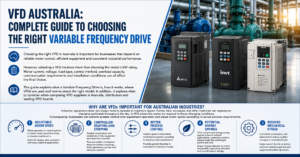
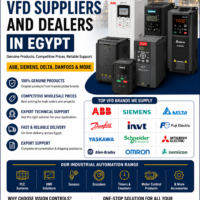
VFD Australia: Complete Guide to Choosing the Right Variable Frequency Drive
Choosing the right VFD in Australia is important for businesses that depend on reliable motor control, efficient equipment and consistent industrial performance. Variable Frequency Drives are widely used in manufacturing, HVAC, water treatment, pumping systems, conveyors, compressors and industrial automation.
However, selecting a VFD involves more than checking the motor’s kW rating. Motor current, voltage, load type, control method, overload capacity, communication requirements and installation conditions can all affect the final choice.
This guide explains what a Variable Frequency Drive is, how it works, where VFDs are used and how to select the right model. In addition, it explains what to consider when comparing VFD suppliers in Australia, distributors and leading VFD brands.
What Is a VFD?
A Variable Frequency Drive (VFD) is an electronic device used to control the speed and torque of an AC motor. It works by adjusting the frequency and voltage supplied to the motor.
Unlike a motor connected directly to a power supply, a VFD allows the motor speed to change according to the requirements of the application. As a result, equipment can operate at different speeds instead of continuously running at a fixed speed.
For example, a pump may not need to operate at full speed throughout the day. In that situation, a VFD can reduce the motor speed when demand falls and increase it when more flow is required.
A typical VFD includes several key sections:
AC input
Rectifier
DC bus
Inverter
Control electronics
Communication interfaces
Motor output terminals
The drive processes incoming electrical power and produces a controlled output for the motor. Therefore, a VFD can provide more flexible motor operation and better control of industrial processes.
How Does a Variable Frequency Drive Work?
A Variable Frequency Drive first converts incoming AC power into DC power. Next, the inverter section converts that DC power back into controlled AC output.
The frequency of this output determines the motor’s operating speed. Therefore, the VFD can lower or increase motor speed according to process requirements and application limits.
For instance, when a machine requires less speed, the VFD can reduce the output frequency. On the other hand, when higher speed is required, the drive can increase the frequency within the motor and application limits.
Modern VFDs can also provide different control methods, including:
V/Hz control
Sensorless vector control
Closed-loop vector control
Torque control
The appropriate control method depends on the motor, load and required performance. While basic V/Hz control may suit some applications, demanding machinery may require sensorless vector or closed-loop control.
Why Are VFDs Important for Australian Industries?
Industrial equipment does not always need to operate at maximum speed. Pumps, fans, conveyors and other machines can experience changing workloads throughout the day.
A VFD allows the motor to respond to these changing conditions. Consequently, businesses can achieve greater control over equipment operation and adjust motor speed according to actual process requirements.
1. Adjustable Motor Speed
A VFD allows operators or control systems to adjust motor speed according to process requirements.
For example, pumps can change speed according to flow demand. Similarly, conveyors can operate at different speeds based on production requirements. This flexibility makes VFDs useful across many industrial applications.
2. Controlled Starting and Stopping
A VFD can gradually accelerate and decelerate the motor. As a result, equipment can experience smoother starting and stopping compared with uncontrolled motor operation.
Controlled acceleration can help reduce sudden mechanical stress on:
Motors
Couplings
Belts
Gearboxes
Pumps
Conveyor systems
Therefore, controlled motor operation can support smoother equipment performance.
3. Better Process Control
Variable speed control allows machinery to operate according to actual process requirements.
For instance, a pump can adjust its speed according to flow demand. Meanwhile, a conveyor can operate at different speeds based on production requirements.
As a result, VFDs can provide greater flexibility in automated industrial processes.
4. Potential Energy Savings
VFDs can provide energy-saving opportunities in suitable applications. This is particularly relevant to variable-torque loads such as centrifugal pumps and fans.
By reducing motor speed when full output is unnecessary, these systems may require less power. However, actual energy savings depend on the motor, load profile, operating schedule and overall system design.
5. Reduced Mechanical Stress
Controlled acceleration and deceleration can reduce sudden changes in mechanical load.
Consequently, connected equipment may experience smoother operating conditions. This can be useful for machinery that frequently starts, stops or changes speed.
6. Automation and Connectivity
Modern VFDs can integrate with industrial automation systems. Depending on the model, communication options may include:
Modbus
CANopen
PROFIBUS
PROFINET
EtherNet/IP
Other Ethernet-based protocols
These communication options allow drives to exchange information with PLCs, HMIs, SCADA systems and other control equipment.
Choosing a VFD in Australia
There are many Variable Frequency Drive options available in the Australian market. These range from compact drives for small machines to high-capacity industrial VFDs designed for demanding applications.
However, the correct drive depends on the motor and application. Before purchasing a VFD, businesses should evaluate several important factors.
Motor Power and Current
Motor power is an important starting point, but it should not be the only specification considered.
Instead, check the motor nameplate for:
Rated power
Rated voltage
Rated current
Frequency
Speed
Power factor
Duty information
Motor current is especially important when sizing the VFD. Two motors with the same kW rating may have different current requirements. Therefore, selecting a drive based only on kW can result in an unsuitable choice.
Application Type
The application has a major influence on VFD selection.
A centrifugal pump does not have the same requirements as a conveyor, compressor, extruder or crane. For this reason, consider:
Load characteristics
Starting torque
Required speed range
Acceleration time
Deceleration time
Overload requirements
Duty cycle
Understanding the application makes it easier to identify the appropriate drive class and control method.
Input and Output Voltage
The available electrical supply must match the VFD specifications.
Australian industrial installations commonly use three-phase power. Nevertheless, the actual supply voltage and configuration should always be confirmed before selecting a drive.
In addition, the motor voltage must be compatible with the selected VFD.
Overload Capacity
Some applications require additional torque during starting or periods of high load.
For example, conveyors and high-inertia machines may require greater overload capability than simple fan applications. Therefore, check the drive’s overload rating and duty classification before making a final selection.
Control Method
Different applications require different levels of motor-control performance.
Basic V/Hz control can be suitable for some pumps and fans. However, more demanding applications may benefit from sensorless vector or closed-loop control.
Ultimately, the correct control method depends on the required speed accuracy, torque response and overall process requirements.
Communication and Automation
If the VFD needs to communicate with a PLC, HMI, SCADA system or building management system, network compatibility should be checked before purchasing the drive.
Furthermore, communication requirements may influence the drive model and any additional communication modules required.
Installation Environment
The operating environment can affect VFD performance and service life.
Before installation, consider:
Ambient temperature
Humidity
Dust
Vibration
Ventilation
Enclosure rating
Cooling requirements
Available installation space
For example, a drive installed in a dusty industrial environment may require different protection from one installed inside a clean electrical control room.
VFD Supplier Australia: What Should You Look For?
Finding a VFD supplier in Australia is not simply about finding the lowest product price.
Instead, industrial customers should also consider product availability, technical expertise and after-sales support.
A reliable supplier should ideally provide:
Genuine products
Technical specifications
VFD sizing assistance
Application guidance
Product availability information
Installation guidance
Programming support
Spare-part assistance
Replacement-drive options
After-sales technical support
For production-critical equipment, technical support can be especially valuable. A VFD failure can result in unexpected downtime. Therefore, access to knowledgeable support can make troubleshooting and replacement easier.
VFD Distributor Australia: Why Technical Support Matters
A VFD distributor in Australia can help businesses compare products from different manufacturers and identify a drive that suits their application.
Instead of asking only, “Which VFD is the cheapest?”, it is better to ask, “Which VFD is technically suitable for this motor and application?”
The right selection can help avoid issues such as:
Nuisance trips
Poor motor performance
Overheating
Insufficient torque
Unstable operation
Unexpected downtime
Additionally, an experienced distributor can help with model selection, configuration and replacement requirements.
Industrial VFD Australia: Common Applications
Industrial VFDs in Australia are used across many industries, including manufacturing, water treatment, HVAC, material handling, food processing and industrial automation.
Common applications include the following.
Manufacturing
Manufacturing facilities use VFDs in production machinery, conveyors, mixers, pumps and other motor-driven equipment.
Variable speed control allows production equipment to operate according to process requirements. As a result, manufacturers can adjust machine operation when production conditions change.
Pumps
Pumping systems are one of the most common VFD applications.
VFDs can be used in:
Water supply
Process pumping
Irrigation
Wastewater systems
Cooling systems
Industrial fluid handling
For suitable pump systems, adjusting motor speed can also provide opportunities for energy savings.
HVAC
VFDs are commonly used for HVAC fans and pumps.
Variable speed operation allows equipment to respond to changing heating, cooling and airflow requirements. Therefore, the equipment can operate at different speeds according to system demand.
Conveyors
Conveyor systems often require controlled acceleration, deceleration and speed adjustment.
A VFD can help control conveyor speed according to production requirements. This can be useful in manufacturing, warehousing, packaging and material-handling applications.
Compressors
VFDs can be used with suitable compressors to control motor speed according to demand.
However, the drive and motor must be selected according to the compressor characteristics and required operating range. In addition, the control requirements should be evaluated before choosing a model.
Packaging Machinery
Packaging machines often require controlled and repeatable motor operation.
VFDs can provide adjustable speed control for suitable machine components. Consequently, manufacturers can adapt equipment operation to different production requirements.
Food and Beverage Processing
Food and beverage facilities use motor-driven equipment for processes such as:
Mixing
Conveying
Pumping
Processing
Material handling
The VFD should be selected according to the motor, machine and operating environment.
Water and Wastewater
Water and wastewater facilities use VFDs for pumps, blowers and other rotating equipment.
Variable speed control can help match equipment operation to changing system demand. Therefore, VFDs can be useful in applications where motor speed needs to change according to process conditions.
Popular VFD Brands in Australia
The Australian market includes many international manufacturers of Variable Frequency Drives.
Different manufacturers offer different product families, control technologies, power ranges, communication options and application features. Therefore, the best VFD brand depends on the specific project requirements.
ABB VFD Australia
ABB VFD Australia solutions are widely used in industrial motor control and automation applications.
ffers multiple drive families for different applications and operating requirements. When considering an ABB VFD, evaluate:
Motor power
Motor current
Application type
Control method
Overload requirement
Communication requirements
Danfoss VFD Australia
Danfoss VFD Australia solutions are used in applications such as HVAC, pumps, compressors and industrial processes.
The manufacturer offers drive products with application-focused features and control options. Therefore, the correct model should be selected according to the motor, load and system requirements.
INVT VFD Australia
INVT VFD Australia products are available for various industrial and commercial motor-control applications.
Provides multiple drive ranges across different power ratings. However, model selection should be based on motor specifications and application requirements rather than power rating alone.
Delta VFD Australia
Delta VFD Australia products are used across industrial automation, machinery and motor-control applications.
Provides a range of drive solutions tailored to diverse performance needs and application demands. Consequently, the appropriate model depends on motor specifications, control requirements and the machine being operated.
Fuji VFD Australia
Fuji VFD Australia solutions are available for industrial motor control and automation applications.
Drive solutions are available for a wide range of machine and industrial requirements. For this reason, businesses should evaluate the specific model according to the application and motor characteristics.
Yaskawa VFD Australia
Yaskawa VFD Australia products are used in motor-control and industrial automation applications.
A range of drive families is available to support both general-purpose and demanding applications.Therefore, application requirements, control performance and motor specifications should guide the final selection.
Allen Bradley VFD Australia
Allen Bradley VFD Australia solutions include the PowerFlex family of drives.
These products are commonly considered for industrial automation environments. In facilities using Rockwell Automation control systems, compatibility between the drive, PLC and wider automation architecture can be an important consideration.
Schneider VFD Australia
Schneider VFD Australia solutions include the Altivar range of variable speed drives.
Drive solutions are available for various applications, including:
Pumps
Fans
Compressors
Conveyors
Machinery
Industrial automation
The correct Altivar model depends on the motor and application.
Mitsubishi VFD Australia
Mitsubishi VFD Australia products can be used in factory automation and industrial motor-control applications.
To meet different industrial requirements, Mitsubishi Electric provides a range of automation and drive products.Before selecting a model, consider the motor specifications, machine requirements and automation architecture.
Siemens VFD Australia
Siemens VFD Australia solutions are widely associated with industrial automation and motor-control applications.
For different industrial requirements, Siemens provides a range of drive products and solutions. Therefore, model selection should take into account motor specifications, application characteristics, control requirements and communication needs.
Omron VFD Australia
Omron VFD Australia solutions can be considered for machine automation and motor-control applications.
When integrating a drive into an automation system, businesses should evaluate communication compatibility, control requirements and motor specifications.
How to Select the Right VFD Brand
There is no single VFD brand that is best for every application.
Instead, compare products based on the technical requirements of the project. Before making a decision, ask the following questions.
What Motor Are You Controlling?
Start by checking the motor nameplate for:
Voltage
Current
Frequency
Power
Speed
Other relevant specifications
What Type of Machine Is Being Controlled?
A pump, fan, conveyor, compressor and high-inertia machine can require different VFD characteristics.
Therefore, understanding the machine and load is just as important as knowing the motor power.
What Level of Control Is Required?
Some applications may work well with basic V/Hz control. However, others may require sensorless vector or closed-loop control for improved performance.
Does the VFD Need PLC Communication?
If the drive needs to communicate with a PLC, HMI or SCADA system, verify network compatibility before selecting the model.
In addition, check whether any communication modules are required.
What Is the Operating Environment?
Temperature, dust, moisture, vibration and enclosure requirements can influence VFD selection.
For this reason, installation conditions should be considered before purchasing the drive.
What Support Is Available?
Finally, consider technical assistance, programming support, spare parts and replacement availability.
The initial purchase price is only one part of the total cost of owning an industrial drive.
Why Work With an Experienced VFD Supplier?
A VFD is an important part of a complete motor-control system.
Selecting the wrong drive can result in:
Nuisance trips
Poor motor performance
Overheating
Insufficient torque
Unstable operation
Unexpected downtime
Therefore, an experienced VFD supplier in Australia can assess the application before recommending a suitable product.
This assessment may include:
Motor and load analysis
VFD sizing
Application evaluation
Brand comparison
Model selection
Communication requirements
Control requirements
Installation considerations
Programming support
Commissioning assistance
Replacement-drive selection
As a result, businesses can make a more informed decision instead of choosing a drive based only on its advertised kW rating.
VFD Replacement and Upgrades in Australia
Many Australian industrial facilities operate machinery for many years. Consequently, an existing VFD may eventually fail or become obsolete.
Replacing it with the exact same model may not always be the best option. Instead, the existing system should be assessed before selecting a replacement.
Important factors include:
Existing motor specifications
Existing VFD model
Load characteristics
Control method
PLC compatibility
Communication protocol
Physical dimensions
Wiring requirements
Installation conditions
Available replacement models
A modern drive may offer improved monitoring, diagnostics, communication and control features. Nevertheless, compatibility should always be checked before replacing an existing VFD.
Why Correct VFD Sizing Matters
Correct VFD sizing is one of the most important parts of drive selection.
Two motors with the same power rating may have different current requirements. Similarly, two machines with the same motor size may have very different load characteristics.
Therefore, VFD selection should consider:
Motor rated current
Motor rated voltage
Motor frequency
Motor speed
Motor power
Load type
Starting torque
Overload requirement
Duty cycle
Acceleration requirements
Deceleration requirements
Ambient temperature
Installation conditions
For demanding industrial applications, a professional technical assessment can help determine the appropriate VFD.
Buy VFD in Australia: What Information Do You Need?
Businesses looking to buy a VFD in Australia can speed up the selection process by providing complete motor and application information.
Before requesting a quotation, collect the following details.
Motor Information
Motor manufacturer
Motor model
Rated power
Rated voltage
Rated current
Frequency
Rated speed
Application Information
Machine type
Load characteristics
Required speed range
Starting requirements
Operating hours
Overload requirements
Electrical Information
Supply voltage
Number of phases
Frequency
Available protection
Existing control equipment
Automation Information
PLC manufacturer
HMI or SCADA requirements
Required communication protocol
Existing network architecture
Providing this information helps the supplier identify a suitable drive more efficiently.
VFD Australia: Choosing the Right Solution for Your Application
Whether you are searching for VFD Australia, Variable Frequency Drive Australia, VFD Supplier Australia, VFD Distributor Australia or Industrial VFD Australia, the most important consideration is application suitability.
The right VFD should match:
The motor
The load
The required control performance
The electrical supply
The operating environment
The automation system
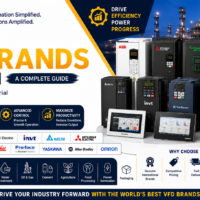
Leading manufacturers such as ABB, Danfoss, INVT, Delta, Fuji Electric, Yaskawa, Allen-Bradley, Schneider Electric, Mitsubishi Electric, Siemens and Omron offer different drive solutions.
However, the most suitable brand and model depend on the technical requirements of each project.
Vision Controls can assist businesses looking for Variable Frequency Drive solutions for industrial and automation applications.
Whether you are replacing an existing drive, upgrading a motor-control system or planning a new installation, the selection process should begin with the motor and application requirements.
Vision Controls can help businesses evaluate their requirements based on factors such as:
Motor specifications
Application type
Control requirements
System compatibility
Communication requirements
Replacement requirements
By selecting the right drive from the beginning, businesses can help reduce compatibility problems and simplify future maintenance.
If you are looking for a VFD supplier in Australia, contact Vision Controls to discuss your VFD requirements and identify a suitable solution for your application.
Frequently Asked Questions About VFDs in Australia
What Is a VFD?
A VFD, or Variable Frequency Drive, is an electronic motor controller that regulates the speed and torque of an AC motor by controlling the frequency and voltage supplied to it.
What Is a Variable Frequency Drive Used For?
Variable Frequency Drives are used to control AC motor speed and torque. Common applications include pumps, fans, conveyors, compressors, manufacturing equipment and industrial automation systems.
What Is the Difference Between a VFD and a VSD?
VFD means Variable Frequency Drive, while VSD means Variable Speed Drive.
The terms are often used interchangeably in motor-control applications. However, VFD specifically refers to a drive that controls motor speed by varying electrical frequency.
How Do I Choose a VFD in Australia?
Start with the motor nameplate information. Check the rated power, voltage, current, frequency and speed.
Next, consider the load type, required torque, overload capacity, control method, communication requirements and installation environment.
Which VFD Brand Is Best?
There is no universal best VFD brand.
ABB, Danfoss, INVT, Delta, Fuji Electric, Yaskawa, Allen-Bradley, Schneider Electric, Mitsubishi Electric, Siemens and Omron all offer different drive solutions.
Therefore, the best choice depends on the motor, application and technical requirements.
Can a VFD Save Energy?
A VFD can reduce energy consumption in suitable applications.
Energy-saving potential is particularly relevant to variable-torque loads such as centrifugal pumps and fans. However, actual savings depend on the motor, load profile, operating schedule and system design.
Can VFDs Be Used With Pumps and Fans?
Yes. Pumps and fans are common VFD applications.
Variable speed control can allow the equipment to respond to changing demand. Nevertheless, correct sizing and system design are important for reliable operation.
Do I Need a VFD Supplier or Distributor?
For straightforward applications, selecting a VFD may be relatively simple.
However, industrial machinery, complex automation systems and critical processes may require technical assistance. An experienced VFD supplier or distributor can help with sizing, model selection, configuration, replacement and technical support.
What Information Should I Provide When Requesting a VFD Quote?
Provide the motor nameplate details, application type, supply voltage, motor current, motor power and required speed range.
If the VFD will connect to a PLC or automation system, also provide the required communication protocol and control requirements.
What Is an Industrial VFD?
An industrial VFD is a variable frequency drive designed for motor-control applications in industrial environments.
Depending on the model, industrial VFDs can support higher power levels, demanding load conditions, advanced control methods and industrial communication systems.
Where Can I Buy a VFD in Australia?
Businesses can purchase VFDs through manufacturers, authorised distributors and specialist industrial automation suppliers.
When comparing suppliers, consider product availability, technical support, application expertise, warranty, spare parts and replacement assistance in addition to price.
Final Takeaway
A Variable Frequency Drive is more than a device for changing motor speed. It can be an important part of a modern industrial motor-control and automation system.
For businesses searching for VFD Australia, the selection process should focus on the complete application rather than product price alone.
Correct motor sizing, load analysis, control requirements, communication compatibility and installation conditions all play an important role. Therefore, working with an experienced VFD supplier in Australia can make product selection, replacement and technical support easier.
Whether you need an ABB, Danfoss, INVT, Delta, Fuji, Yaskawa, Allen-Bradley, Schneider, Mitsubishi, Siemens or Omron solution, the right choice should always be based on the actual requirements of the motor and application.
For businesses looking for reliable Variable Frequency Drive solutions in Australia, Vision Controls can assist with evaluating requirements and identifying suitable options for industrial and automation applications.